 |
| October 1st, 2011 Big Potato Dig at Ortega farm north of Alamosa, CO |
Agronomist Patrick O'Neill invited me and several others to help hand dig potatoes from his research plot north of Alamosa, CO. He is studying the impact of different soil conditions, amendments to the soil, etc on the nutrients in the potatoes. Because the potatoes in the different conditions needed to be kept separate from each other, it required hand digging and bagging them for weight. He was also measuring the pounds of potatoes produced per 10 foot section of row. Most of the potatoes were grown under organic conditions, but he also used the farmer's conventionally grown potatoes as the control condition for the study. We were delighted to find worms in the soil; apparently, that is a pretty big deal here in the sandy soils of the San Luis Valley. Somebody did something right with compost.
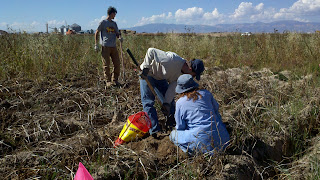 |
| Volunteers dig the potatoes by hand to record how many pounds of potatoes are produced per ten foot row in each of the experimental conditions for the study. |
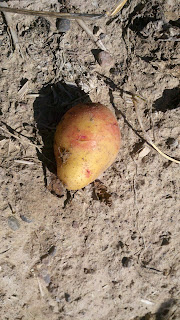 |
| Yukon Golds have pink eyes. Note the bits of straw in the soil--this helps with the worm hospitability. |
|
It was a fun morning of chatting with other organically minded, local food-ies. I worked a row with an organic farmer with blue hair, and we talked about beekeeping and GM canola. Genetically modified canola, which is the only kind of canola allowed to be grown in the valley due to some legal weirdness, kills bees according to Tom Haefli, local commercial beekeeper. He won't put his bees on canola fields, but California beekeepers will.
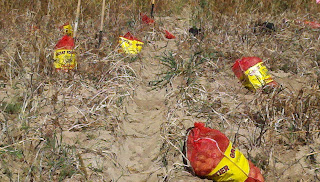 |
| By lunch, we had bagged several samples. |
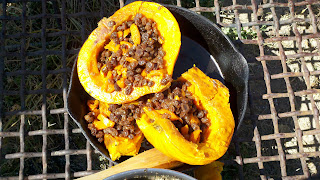 |
| You can't get much more local than this delicious lunch comprised of a roasted pumpkin from the nearby field, as well as potatoes (surprised?), spinach and Kretsinger beef. Old timers told stories of sling-shotting rabbits while picking potatoes for meat-and-potatoes field lunch. |
It felt good to connect with people who not only believe in organic, sustainable food production, but who are doing something about it. I was also happy to read today about a
thirty-year study in Canada that shows that "organic farming outperformed conventional farming in every measure."
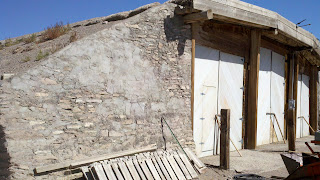 |
| Old-school earthen potato storage shed |
After the potatoes are harvested by hand for the study, the farmer will harvest the rest of them by machine for donation to La Puente Homeless Shelter in Alamosa/the food bank network of the San Luis Valley. Instead of giving them thousands of pounds all at once, the farmer will store them in an old-school earthen potato storage shed and deliver potatoes throughout the winter months.


